
September was a weaker month for investment markets as investors digested another increase in Australian interest rates and ongoing concerns that inflation may take longer than expected to return to target levels.
The S&P/ASX 200 Index fell 3.2% during the month, closing at 8,789 points. International markets were also generally softer, with the US S&P 500 falling 0.5%, the UK FTSE 100 declining 2.0% and Hong Kong's Hang Seng Index falling 3.7%. Japan's Nikkei Index was one of the few major markets to finish higher, rising 0.7%.
The Australian dollar weakened against the US dollar, ending the month at approximately US69.5 cents. The Reserve Bank of Australia increased the cash rate from 4.35% to 4.60%.
Interest rates were the dominant theme throughout September. The latest increase took the cash rate to its highest level since 2011, highlighting the ongoing challenge of bringing inflation back within the Reserve Bank's target range. While inflation has fallen significantly from its peak, recent data suggests price pressures remain more persistent than expected.
The chart below highlights the history of Australian interest rates and provides useful perspective.
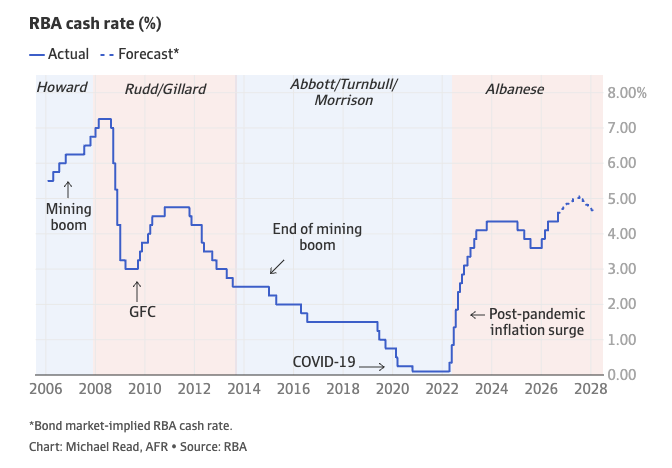
While today's borrowing costs feel high compared to the unusually low rates experienced during the pandemic, interest rates spent much of the 1990s and 2000s above current levels. The period of near-zero interest rates was the exception rather than the norm.
Many investors are now asking whether interest rates are close to their peak, and financial markets remain divided on the answer. While some economists expect additional increases, others expect higher rates to gradually slow spending and inflation over the coming year. Recent commentary from the Reserve Bank suggests it remains focused on inflation while assessing how previous rate increases continue to flow through the economy.
Higher interest rates create both challenges and opportunities. While borrowers face higher financing costs, investors are benefiting from improved returns on cash, term deposits and fixed interest investments.
While market volatility may persist, history shows that inflation and interest rate cycles are a normal part of investing. Maintaining a diversified portfolio and focusing on long-term objectives remains the most effective way to navigate changing market conditions.
Looking ahead, investors will continue to watch inflation data and future Reserve Bank announcements for clues about the direction of interest rates. While uncertainty remains, maintaining a disciplined long-term investment approach and avoiding short-term reactions to market movements remain important.
This article contains general information only and does not constitute financial advice. You should consider seeking advice from your financial adviser to determine whether this information is appropriate for your personal circumstances, financial situation and investment objectives.